 Temple Museum ➚


History
Beopjusa during the Joseon Dynasty

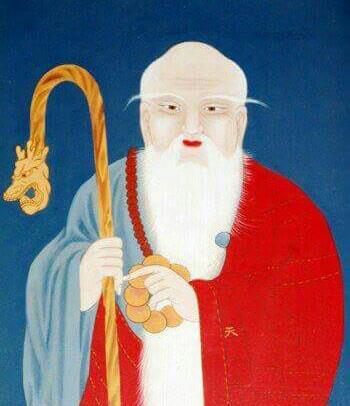
The lamp of Dharma continued to burn during the Joseon Dynasty. It is often said that Confucianism was respected during the Joseon Dynasty while Buddhism was suppressed. But Confucianism was used only as an ethical code for ruling of the nation and as a form of personal cultivation, and people continued to sincerely believe in Buddhism. It was the same for the royal family.
During the reign of King Sejo (1455∼1468) during the Joseon Dynasty, the High Priest Sinmi resided at the temple and rebuilt the temple to a great extent. The Venerable Sinmi was highly respected as the royal teacher of King Sejo. Previously, he had also rebuilt Bokcheonsa Temple located in Mt. Songni in Dec., 1449 (the 31st year of the reign of King Sejong), which is recorded in the 'Record of Rebuilding of Bokcheonsa Temple'.
During the mid-Joseon period, the temple was a great temple with more than 60 buildings and 70 hermitages. However, most of the buildings were burned down during Imjin-Waeran which broke out in 1592 (the 25th year of the reign of King Seonjo). Partial reconstruction continued, but again all the temple buildings burned during Jeongyu-jaeran (the 2nd invasion of Japan between 1597 and 1598). After the war, Samyeong High Priest Yujeong rebuilt Palsangjeon from 1605 (the 38th year of the reign of King Seonjo) to 1626 (the 4th year of the reign of King Injo).
The rebuilding resumed in 1624, and the 'Records of the History of Beopjusa' was published in the next year after finishing the Buddhist service. After then, the Venerable Byeokam-Gakseong (1575∼1660) reconstructed the devastated temple. The Venerable Byeokam is comparable to the High Priest Seosan who saved the nation by organizing monk soldiers during Imjin-Waeran. He fought bravely during Byeongja-horan (the Manchu war of 1636) as leader of the Righteous Army and made a great contribution to saving the nation.
In March, 1851 (the 2nd year of the reign of King Cheoljong), prime minister Kwon Don-in made efforts to reconstruct temples on a national scale. In 1872 (the 9th year of King Gojong), the 2-story Yonghwa-bojeon that had stood in the current position of Cheongdong-daebul (a great bronze image of Buddha) was demolished.